
How To Build A Classic Physique
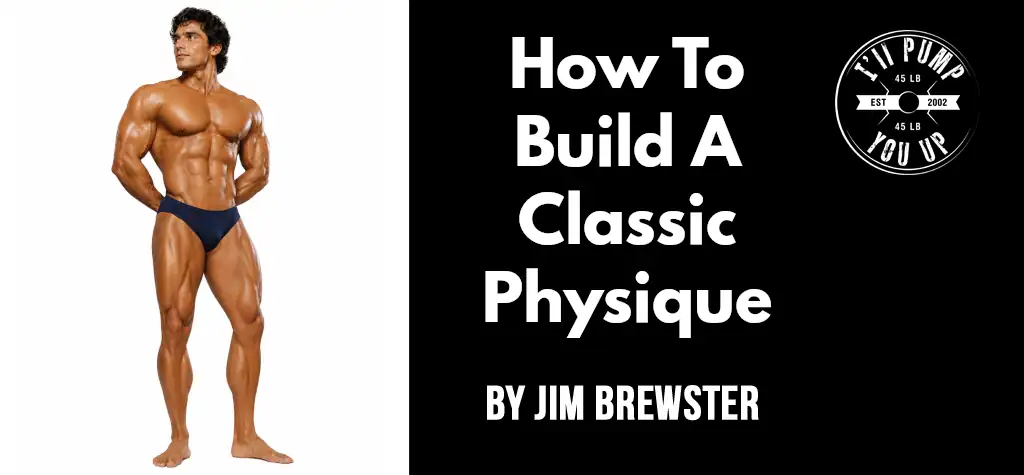
If you want to know How To Build A Classic Physique, you’ll need to focus on your V taper (sometimes known as X frame). That means wide lats, wide shoulders, a narrow waist, quads with good outer sweep, and calves that match your upper arm size. Plus, your proportions should be balanced. This type of physique in bodybuilding seems like a work of art, right? In this article, I will cover everything you need to know. Ready? Then let’s get started!
What Is A Classic Physique?
It is a muscular physique featuring proportions that are symmetrical and balanced. The look should be almost artistic. It’s a little subjective, but common characteristics of a classic physique include:
| Muscle Group | Highlights | Other Characteristics |
| The back | Focus on lat width | Overall balance |
| Side deltoids | Capped, round, wide delts | Defined |
| Biceps, triceps, and forearms | Balanced, thick, well defined | |
| The midsection | Tight, defined, no distended guts! | |
| Quads | Good outer thigh sweep, well developed | |
| Calves | Proportionate to the upper arms |
Developing a classic physique like this takes targeted, balanced training combined with a clean diet and the right supplements.
How Do You Build A Classic Physique?
Do you want an aesthetic bodybuilding physique? You will need to work on your proportions, symmetry, balance, and conditioning. If you’re trying to develop an aesthetic body, you will need a visual image of how you want to look. A good idea is to find bodybuilders or athletes that have a physique like the one you want to develop.
For example, Samir Bannout was well-known for his aesthetics and proportions. Many would say Bannout had an artistic physique. He is 5’8” and competed at around 198lbs. Looking at his physique, you may feel it has more flow and pleasing lines than, say, Dorian Yates or Ronnie Coleman. Do you feel he’s the best example of your goal of an aesthetic physique? Then you will need to study pics of Bannout so you can create a clear mental image.
Visualize Your Classic Physique
Now that you have a visual image of the physique you want to build, you can use visualization techniques to help achieve it. Practice visualizing what you want your physique to look like. Picture yourself posing in a mirror and imagine the physique you want to achieve as you’re posing.
Also, you can visualize your physique as you work out. Arnold saw his biceps as huge mountains while he trained. Follow his lead and see yourself developing a stunning physique as you work out.
Use The Mind-Muscle Connection To Improve Your Aesthetics
An aesthetic physique demands a good V taper. Your V taper comes from lat width and wide side delts. An exercise like lat pulldowns is a great way to work on lat width. It’s also a problem exercise because many people tend to feel it in the biceps. To feel it in the lats, you have to mentally connect with the muscle.
First, make sure you understand the function of the lats. Here’s an exercise to help you connect mentally with your lats:
- Place Your Left Hand On Your Right Lat Muscle
- Hold Your Right Arm Straight Up With Palm Facing Forward
- Make A Fist & Pull Your Arm Down Slowly – You’re Imitating The Pull Down Movement
- You Should Feel Your Lat Contracting
Next, as you prepare to start the exercise, picture your arms as hooks. Think about the function of the lats. Begin the pull by flexing and pulling down with the lats. Do not pull with your arms. Let your arms follow your lats. Focus your mental concentration only on your lats. Hold and squeeze for a 2 count at the bottom and slowly let the bar go back up. Using your lats, fight the bar the entire way back up.
How Long Does It Take To Build A Classic Physique?
This depends on the kind of shape you’re in when you start. If you already have good muscle size but want to focus on aesthetics, it might take several months. If you’re just starting, it will take at least a year to build sufficient mass. As you build size, you can work on your aesthetics at the same time.
The most important thing is to plan accordingly so you can develop an aesthetic physique. We will review training guidelines soon, but you also have to eat clean. Aesthetic bodybuilding includes a clean, high protein diet. You should be eating minimal sugar and moderate total carbs. Also, eat a moderate amount of healthy fats.
You will also want to keep sodium low. Too much sodium will cause unwanted bloating, which will ruin your proportions. If you need to build mass, think in terms of a lean bulk. Gain muscle slowly and limit fat gain as much as possible. If your abs smooth over, you’re gaining too fast. This might mean it will take longer to build an aesthetic body. However, you want to do it right.
The Classic Physique Workout
An aesthetics-based workout will enhance muscular symmetry. Bodybuilders training for better aesthetics will also focus on reducing body fat. The goal will be to achieve balanced size with good conditioning. Your routine will feature targeted exercises to develop specific aspects of your physique. This is what bodybuilding aesthetics are all about.
Classic Physique workouts will feature the following:
- Use A 4-Day Split Routine To Set Up Your Exercises And Workouts – This Allows More Total Work For Each Muscle Group
- You Should Use A 50/50 Ratio Of Compound and Isolation Lifts
- Your Routine Should Average 6-12 Reps Per Set (Abs Will Go Higher)
- You Should Average 3 Sets Per Exercise
- Use Exercises That Build A V-Taper
- Use Exercises That Target Your Outer Thigh Sweep, Hamstrings, and Calves
It’s important to begin your workout with your heaviest exercises – your compound lifts. No matter what type of bodybuilding physique you’re after, it’s always good to improve your strength. The key to an aesthetic body will be your focus on isolation exercises. Think side laterals for the delts, and quad exercises that work the outer sweep.
Here’s an example workout.
The Classic Physique Routine – 4 day split
Day 1: Chest, Triceps, Abs
Bench Press
Warm up over 3 sets:
- Bar x 15 reps
- 20% RM x 10 reps
- 40% RM x 8 reps
3 sets x 6-8 reps
Incline Press
3 sets x 6-8 reps
Incline Dumbbell Flyes
3 sets x 8-10 reps
Close Grip Bench Press
2 sets x 6-8 reps
EZ Bar Extension
2 sets x 6-8 reps
Pressdowns (Rope)
2 sets x 8-10 reps
Crunch
3 sets x 15 reps
Ab Coaster
2 sets straight, 2 sets to each side x 15 reps each sets
Day 2: Off
Day 3: Back, Biceps
Deadlifts
Same as bench press
Seated Row Machine
3 sets x 6-8 reps
Lat Pulldowns
4 sets x 6-8 reps
EZ Curls
2 sets x 6-8 reps
Incline Dumbbell Curls
2 sets x 6-8 reps
Hammer Curls
2 sets x 6-8 reps
Wrist Curl
3 sets x 8-10 reps
Hanging Leg Raise
3 sets x 12 reps
Seated Crunch Machine
3 sets x 15 reps
Day 4: Shoulders, Traps
Overhead Press
Same as bench presses
Dumbbell Side Laterals
4 sets x 8-10 reps
Dumbbell Rear Laterals
3 sets x 8-10 reps
Shrugs
3 sets x 6-8 reps
Ab Wheel
3 sets x 10 rollouts
Twisting Crunch
3 sets x 15 reps
Day 5: Off
Day 6: Legs
Squats
Same as bench presses, except perform 3 working sets
Leg Press – Narrow Stance
3 sets x 8-10 reps
Lying Leg Curls
3 sets x 8 reps
Standing Calf Raises
2 sets x 10-12 reps
Seated Calf Raises
2 set x 10-12 reps
Stomach Vacuum
3 sets x 15 “reps” – Hold as long as you can
Day 7: Off
Performance Notes
You have some room to move your exercise days if needed. You can also move your rest days if you want to. Legs and back are big days because you’re doing both squats and deadlifts. That’s why there’s a rest day before and after leg day.
Concentrate on proper exercise form. Make sure you lift the weight under control. Don’t rush your reps. This is critical. I see it all the time: lifters rushing through their (partial) reps like it’s a race. I also see a lot of lifters doing quarter reps. Use the entire range of motion and do your reps as described in the next paragraph.
Regarding tempo, take 2-3 seconds to lift the weight. Then take 4-6 seconds to return to the start position. On your last set of each exercise, hold in the fully stretched position for 4-6 count.
I know the current trend is to stop a few reps shy of failure, but I suggest stopping when you can’t complete your last rep. This should happen within the listed rep range for each exercise.
If you can do 12 reps but stop at 8, you need to add more weight and work harder. When you can do 2 more reps than your target for 2 workouts in a row (the 2×2 rule), add 10% more weight to exercises for major muscle groups and 5% more weight to exercises for smaller muscle groups. Add weight to as many exercises as possible. If you can’t do more weight, try adding 1-2 more reps. The idea is to keep your workouts progressive.
Rest 60-120 seconds between sets.
Here’s Some Classic Physique Examples
There are several levels of a classic physique. Different people visualize a different look when it comes to an aesthetic body. Still, any aesthetic physique should have the same fundamental characteristics. This means the V-taper, slim waist, round shoulders, and well-developed legs. It also means visible abs and good conditioning.
What are the most obvious examples of an aesthetic bodybuilder? Many would say Steve Reeves was the first to define this look. Guys like Frank Zane, Bob Paris, Flex Wheeler, Samir Bannout, Lee Labrada, and Shawn Ray are others. There are many more, but these bodybuilders are great examples.
The looks these guys present are in direct contrast to the blocky look of some of today’s bodybuilders. Guys that put size first may not have good proportions. A great example of this is Mike Katz from the ’70s. Katz has a big chest, decent arms, and little else. Compare that to a Zane-type with a very aesthetic, well-proportioned physique.
Others may feel these legends are less aesthetic and more mass-monsters. As far as modern-day bodybuilders, most pros do not have good aesthetics. This is because they have distended stomachs and train for pure size. Often it’s size without good proportions. The best examples of a recent bodybuilder with good proportions generally include Andrew Jacked, Chris Bumstead, and Wesley Vissers.
Nutrition & Supplements
Building a Classic Physique requires a highly structured nutrition plan that includes plenty of quality protein, complex carbohydrates for fullness, and the right supplements to optimize recovery and muscle growth/development.
Macronutrient Guidelines (1)
- Protein – Aim for 1 to 1.5 grams of protein per pound of bodyweight. Rely on complete, high-quality sources like lean beef, chicken breast, egg whites, fish, Greek yogurt, and cottage cheese.
- Carbohydrates (Fuel & Pump) – Carbs are essential for bringing fullness to a Classic Physique and of course the energy to workout. Emphasize complex sources like brown rice, sweet potatoes, and oatmeal. As I always suggest, consume 50% of your carbs around your workout times to maximize glycogen storage.
- Fats (Hormonal Balance): Keep fats moderate (20-25% of total calories). Focus on healthy fats from sources like avocados, macadamia nut oil, and fatty fish like salmon.
Supplement Suggestions (2)
- Hi-Tech Precision Protein – Helps lifters reach their daily protein requirements and in this case targets protein synthesis.
- Gorilla Mind Gorilla Mode – Balanced, high dosed pre-workout for optimal in-the-gym performance.
- AllMax Nutrition Creatine – Patented micronized creatine monohydrate for max ATP production and water-based pumps.
- Myogenix Myo Vite – The ultimate micronutrient Pack.
- Real Formulas Brainstorm – To help you master the mind-muscle connection.
- Hi-Tech Lipodrene – To help you achieve a lean, well-defined Classic Physique.
Your Classic Body – Summary
Building A Classic Physique takes effort, dedication, and vision. Once you’re aware of the aesthetic physique you want to build, commit yourself to your goal. Once you’ve done that, it’s time to stop by illpumpyouup.com and stock up!
References:
- Roberts, B. M., Helms, E. R., Trexler, E. T., & Fitschen, P. J. (2020). Nutritional Recommendations for Physique Athletes. Journal of human kinetics, 71, 79–108. https://doi.org/10.2478/hukin-2019-0096
- Helms, E. R., Aragon, A. A., & Fitschen, P. J. (2014). Evidence-based recommendations for natural bodybuilding contest preparation: nutrition and supplementation. Journal of the International Society of Sports Nutrition, 11, 20. https://doi.org/10.1186/1550-2783-11-20