
4 Ways Insulin Affects Muscle Growth!
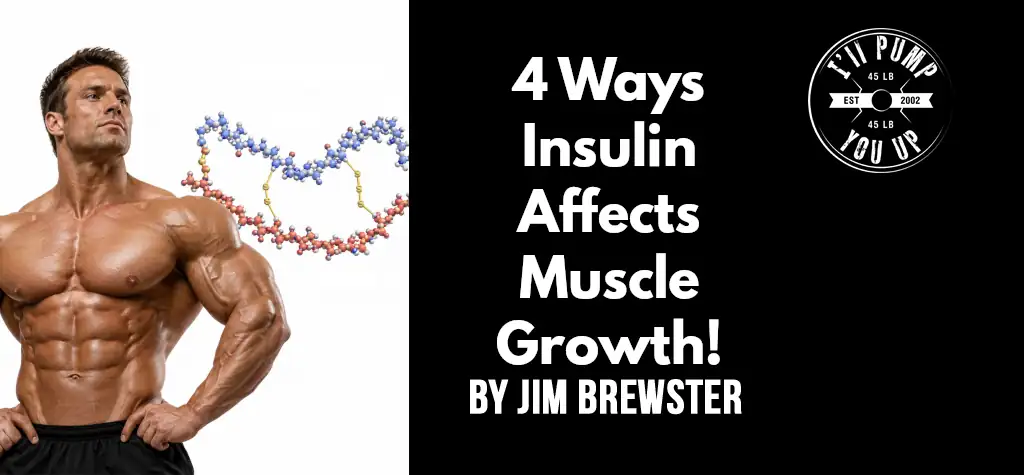
4 Ways Insulin Affects Muscle Growth! When it comes to building muscle, the body has several potent anabolic hormones that can amplify that process. Testosterone and GH are the probably first ones that come to mind – but don’t forget insulin! If you want to harness the power of this anabolic hormone to build more muscle, you need simple carbohydrates and fast-digesting protein. Sounds intriguing, doesn’t it? Then let’s get right into it and find out more!
What Is Insulin?
This is one of the three primary anabolic hormones produced by the body. It’s a protein hormone released by the pancreas when levels of glucose increase above normal. Now, we know that carb consumption in the timeframe leading up to and surrounding the workout is important as far as energy is concerned. It may also be important as far as mTOR activation is concerned. Simple carbs that are taken in during the hours surrounding your workout cause insulin spikes, which means that glucose absorption, utilization, ATP production, amino acid absorption, and protein synthesis are all enhanced. (1, 2)
This means that you’ll want to manipulate this powerful hormone by using your post-workout shake to cause an insulin spike. Post-workout is the ideal time to do this because at this point your muscles are starving for the amino acids you’ll get from a fast-acting protein (whey) and the fast digesting simple carbs will replenish glycogen stores. In addition, if you’re using creatine, absorption will be enhanced.
How Does Insulin Affect Muscle Growth?
1). Reduced Muscle Protein Breakdown
It minimizes protein catabolism (breakdown) by regulating the body’s use of amino acids, particularly in muscle tissue.
2). Nutrient Transport
This potent hormone also acts as a “key” that drives glucose and amino acids from the blood into muscle cells.
To maximize natural insulin for muscle growth, it is crucial to consume nutrients (carbohydrates and protein) before and after workouts, as this is when muscles are most receptive to storing nutrients.
3). Stimulates Protein Synthesis
This impressive hormone helps build muscle by promoting the translation of mRNA, which creates new muscle protein.(3)
What does that mean in simple terms?
Here’s a great analogy: Insulin acts like a “construction foreman” that tells your body to start building muscle using the protein you eat.
Here is the breakdown of the process:
- This impressive hormone is released after eating (especially carbs and protein) which signals the body to store energy.
- Promotes the translation of mRNA – Imagine mRNA as the “blueprint” instructions for building muscle protein. This powerful hormone acts as the activator that tells the cellular machinery to read these blueprints faster and more often.
- Creates new muscle protein – Once the instructions are read, the body uses amino acids from protein you’ve eaten to build new muscle tissue.
Wait! You’re talking about post-workout insulin spikes to drive macronutrients into muscles – I thought excess carbohydrates (primarily simple carbs) cause an insulin spike that leads to those excess carbs being stored as fat?
The reconciliation of insulin spikes with post-workout nutrition lies in nutrient partitioning, which is where the metabolic state of your body determines if macronutrients are stored in muscle or as fat. While insulin can promote fat storage, intense workouts create a unique environment that prioritizes muscle recovery. (4)
4). Muscle Quality
Maintaining insulin sensitivity is important for building muscle; exercise increases this sensitivity, while high insulin resistance can lead to muscle loss.
What Is Insulin Sensitivity?
We already have seen this term in this article. For clarity, let’s take a closer look. This term refers to how responsive your body’s cells are to insulin, which among the other benefits listed in this article, is a hormone that regulates blood sugar. High sensitivity means cells efficiently move glucose from the blood for energy, requiring less insulin, while low sensitivity means cells struggle to respond, causing high blood sugar. (5)
Key Aspects of Insulin Sensitivity:
- Optimal Function – When you are sensitive to this hormone, a small amount of it can effectively manage blood glucose levels.
- Health Impact – High sensitivity is associated with better metabolic health, lower risk of Type 2 diabetes, heart disease, and Alzheimer’s disease.
- Insulin Resistance – The opposite of sensitivity, where cells stop responding to insulin, forcing the pancreas to produce more until it cannot keep up, resulting in high blood sugar.
- Improving Sensitivity – Regular exercise, eating a healthy diet, losing excess bodyfat, and consistent sleep can improve sensitivity.
How To Optimize The Power Of This Anabolic Hormone!
Don’t Confuse The Natural Hormone With The Pharmaceutical Version !
While this hormone is crucial for growth, it does not act alone—sufficient amino acids from protein must be present to promote muscle gains. Improper use of the artificial version of this hormone can be dangerous, potentially causing severe, life-threatening hypoglycemia.
Supplements
Below is a convenient snapshot of what supplements you should be using to optimize the anabolic effects of this potent hormone.
| Supplement | Primary Role | Suggested Use |
| NOW Berberine | Glucose Disposal Agent (improves nutrient transport) | 3x daily with meals |
| Hi-Tech Insuload | Glucose Disposal Agent | 3x with highest carbmeals |
| NOW Magnesium Caps | Metabolic co-factor | 400 mg before bed |
| AllMax Nutrition Creatine | Anabolic support | 5 grams per day |
| Hi-Tech Precision Protein | Post-workout spike | 1 serving w. simple carbs |
| Gorilla Mind Gorilla Mode | Optimize workout performance | 30 min. before workout |
| NutraBio EAA Pure | Optimize protein synthesis | before, during, after workout |
Nutrition Tips
To optimize insulin’s anabolic potential for muscle growth, focus on strategic carbohydrate timing and maintaining high insulin sensitivity. Remember, this is one of the body’s most potent anabolic hormones, but it can only shuttle nutrients into muscle cells effectively when those cells are primed to receive them through intense workouts and proper nutrition.
Strategic Nutrient Timing
- Post-Workout – Consume .14 grams per pound of bodyweight of high-quality protein and twice that number of simple carbohydrates within one hour of training. Muscles are hypersensitive to insulin immediately after you work out, making this a good time to spike insulin to replenish glycogen and trigger protein synthesis. (6)
- Breakfast Refueling – You’ve slept anywhere from 5 to maybe 9 hours. After this overnight “fast”, your body is in a catabolic state. Consuming 30 grams of protein with 40 grams of carbohydrates at breakfast can raise levels of this hormone to halt protein breakdown and direct glucose and amino acids to your muscles for repair.
- Rest-Days – On non-training days or meals not near the hours around your workout, stick to low-glycemic, complex carbohydrates (oats, brown rice, whole grains). This keeps levels of this impressive hormone stable, preventing excess fat storage while maintaining insulin sensitivity.
General Nutrition Tips for Insulin Sensitivity
Maximizing the “muscle-building” power of this anabolic hormone requires keeping your cells sensitive to it.
- Prioritize High-Quality Protein – Aim for 1 gram of protein per pound of body weight daily. Spread this across meals (approx. 20–40g per meal) to provide a steady supply of leucine, the amino acid that triggers the growth signal. Now, I know it’s a current fad to claim it doesn’t matter when you eat, but any typical person tends to eat multiple times a day – so what’s the big deal? Eat when you’re hungry, and include plenty of protein.
- Choose Healthy Fats over Simple Sugars: Outside of the workout timeframe, avoid sugary carbs that cause insulin spikes, which in this case can lead to any excess carbs being stored as fat. Instead, use fats and fiber to slow the digestion of carbohydrates.
Insulin-Focused Nutritional Strategy – Recap
| Timing | Primary Macronutrient Goal | Recommended Foods |
| Post-Workout | High-GI Carbs + Fast-Digesting Protein | Whey protein, bananas, pineapple, mango (mix whey and your chosen fruit in a blender) |
| Breakfast | Moderate Carbs + Protein | Eggs, oats, Greek yogurt |
| Rest of Day | Low-GI Carbs + Fats + Protein | Chicken, broccoli, nuts, beans |
| Pre-Sleep | Slow-Digesting Protein + Minimal Carbs | Casein, protein powder blends (PEScience Select), cottage cheese |
Summary
In this article, 4 Ways Insulin Affects Muscle Growth, we have learned that you can manipulate insulin spikes to promote muscle growth. I have provided the best times to do this, shown how it all works, and given you suggested supplements as well as nutrition tips. Next, just swing by illpumpyouup.com and stock up!
References:
- Fujita, S., Rasmussen, B. B., Cadenas, J. G., Grady, J. J., & Volpi, E. (2006). Effect of insulin on human skeletal muscle protein synthesis is modulated by insulin-induced changes in muscle blood flow and amino acid availability. American journal of physiology. Endocrinology and metabolism, 291(4), E745–E754. https://doi.org/10.1152/ajpendo.00271.2005
- Fryburg, D. A., Jahn, L. A., Hill, S. A., Oliveras, D. M., & Barrett, E. J. (1995). Insulin and insulin-like growth factor-I enhance human skeletal muscle protein anabolism during hyperaminoacidemia by different mechanisms. The Journal of clinical investigation, 96(4), 1722–1729. https://doi.org/10.1172/JCI118217
- Proud, C. G., & Denton, R. M. (1997). Molecular mechanisms for the control of translation by insulin. The Biochemical journal, 328 ( Pt 2)(Pt 2), 329–341. https://doi.org/10.1042/bj3280329
- https://www.hilarispublisher.com/open-access/the-impact-of-nutrient-timing-on-nutrient-partitioning-103439.html
- https://www.functionhealth.com/article/the-critical-role-of-insulin-sensitivity-in-long-term-health#:~:text=Insulin%20sensitivity%20is%20how%20efficiently,glucose%20as%20an%20energy%20source.
- Jäger, R., Kerksick, C. M., Campbell, B. I., Cribb, P. J., Wells, S. D., Skwiat, T. M., Purpura, M., Ziegenfuss, T. N., Ferrando, A. A., Arent, S. M., Smith-Ryan, A. E., Stout, J. R., Arciero, P. J., Ormsbee, M. J., Taylor, L. W., Wilborn, C. D., Kalman, D. S., Kreider, R. B., Willoughby, D. S., Hoffman, J. R., … Antonio, J. (2017). International Society of Sports Nutrition Position Stand: protein and exercise. Journal of the International Society of Sports Nutrition, 14, 20. https://doi.org/10.1186/s12970-017-0177-8