

5 Keys To Success – Get In Shape 2026 Part 1!
5 Keys To Success – Get In Shape For 2026! The new year is right around the corner – so let’s set up a plan to get you in shape right now! Get off to the right start when 2026 hits – and you can be successful. This 2-Part Series covers it all. The only thing you have to do is follow it – so let’s get started with Part 1!
Keys To Success – # 1 – Nutrition For Fat Loss
I’m sure you have been enjoying the holiday season – certainly we all have. I’m also sure you’ve enjoyed all the food, and probably those high-sugar treats. So when you start your New Year recomp program, the first thing you need to do is to cut back on sugar. The American Heart Association recommends 37.5 grams of sugar or 150 calories from sugar for men, and 25 grams of sugar or 100 calories from sugar for women, per day. (1)
Dropping the sugary carbs first is a great starting point to the 5 Keys To Success program. Therefore, I suggest starting your nutritional plan by dropping 250 calories per day, coming from sugary, simple carbs. If you drop your sugary carbs and can’t reach 250 calories (or 62.5 grams), include complex carbs until you’re hitting the 250 calories.
Make sure you’re keeping your protein intake high – I suggest 1g to 1.25g per lb of body weight. I also suggest dividing your daily protein intake into 5 or 6 meals. As far as fat, shoot for 20% of the day’s total calories, which we will review soon.
Why Only 250 Calories?
For most of us, the best way to start a “diet” is to do so gradually. Do not make the mistake of dramatic calorie reductions. Your approach has to be sustainable. After all, if you can’t sustain a calorie adjustment, what happens when you reach your fat loss goal and can stop “dieting”? You ultimately eat more food and gain back the weight, that’s what!
Now, if you have not lost any body fat after the first two weeks, and you’re following this entire program, reduce your daily calories by another 250. Again, focusing on simple carbohydrates first, then carbs in general. Hopefully, you aren’t eating that much sugar, but if you are, it has to go.
Carbohydrates And Cellular Energy
Let’s take a moment and point out the importance of carbohydrates for cellular energy. After all, they are your body’s primary energy source. Therefore, if you find you’ve reduced your daily carbs to 500 calories (or 125 grams) per day and still aren’t losing, you’ll have to drop again by 250 calories (making 750 total calories per day).
You won’t want to cut much more than that, unless you’re really over-eating. I suggest going no lower than .75 to 1 gram of carbs per pound of bodyweight. Do not go any lower because going too low can cause cortisol release, which we talk about later. Therefore, once you reach that limit, any additional calorie cuts should come from fat. Never, ever cut protein!
Keys To Success – Suggested Daily Calories
We’ve looked at the initial calorie cut. Now let’s look at your total calories. The fastest, simplest way to determine your daily calorie intake is to multiply your body weight by 13. So, if you weigh 200 pounds, that would be 200 x 13 = 2600 calories. Feel free to use an app, but this method works fine.
OK, so now let’s match it up to our protein and carbohydrate suggestions. Our recommended protein grams are 250 (at the high end of 1.25 grams per pound of bodyweight) and carbohydrate grams are 150 ( at the low end of .75 grams per pound of bodyweight).
Here’s our calculation: 250 + 150 = 400 x 4 calories per gram = 1600 calories. That means 600 calories, or 66g, can come from fat.
This starting point takes all your macronutrients into account. If you aren’t losing 1 pound of body fat per week, continue to cut 250 calories from carbs and fat as laid out above, never from protein. Consequently, if you are losing more than 2 lbs per week, add 250 calories from protein and complex carbs to slow it down. Why would you want to slow it down, you might ask? Because if you’re losing weight too fast, you’re losing muscle along with fat. That’s a mistake any hardcore bodybuilder won’t want to make!
An Example List Of Foods
Ok, so we have determined your calorie goal. Of course, this should be combined with the other Keys To Success presented in this program for optimal results, and we will get to those sections soon. In the meantime, here is a list of foods you should be eating, listed per macronutrient.
Protein
Protein choices include: lean beef, chicken, turkey, fish, low-fat and low-sugar Greek yogurt, eggs, protein powder. I suggest plain Greek yogurt which you can find with 2g of sugar per serving. You can mix in nuts, cinnamon and/or protein powder for flavoring.
Carbohydrates
Complex carbs include: whole grains, oatmeal, yams, and brown rice. Good simple carb choices include: bananas, berries, pears, apples, and oranges. Fibrous carbs are “free calories” as the body does not absorb them, and include most veggies, apples with the skin, and oatmeal, to name a few. Always check the label of all carb foods. An important point is that fiber lowers your carb total because the body does not absorb fibrous carb calories, so you can deduct fiber grams from total carb grams, giving you a “net carb” number.
I suggest using the Glycemic Index (GI) when choosing carb foods. For those who may not know, it is a guide that tells you the absorption rate of carbohydrate foods, using pure sugar at a baseline of 100. The lower the number on the GI Index, the healthier the food. For example, a rating of 55 or less is low GI, a rating of 56 to 69 is medium GI, and anything higher would be high GI. (2)
Fats
Healthy choices include flaxseed, sunflower seeds, canola oil, olive oil, almonds, and peanuts. Fat consists of building blocks called fatty acids, which fall into 3 main categories: saturated, polyunsaturated, and monounsaturated. Most foods are a combination of all 3 fatty acid types, one type is usually the dominant type which dictates its classification. See below for more. (3)
Saturated Fats
Found in products such as whole milk, cheese, beef, pork, and ham. Also, oils such as coconut, palm kernel, and vegetable shortening. The liver uses saturated fat to make cholesterol, which is involved in hormone production (such as testosterone). This is important – you need some fat in your diet to keep your body’s hormone production where it should be. Still, watch your saturated fat intake, as too much is not good for heart health.
Polyunsaturated Fats
Found in corn, soybeans, safflower, and sunflower oils. Some fish oils are also high in polyunsaturated fats. This type of fat may help lower total cholesterol.
Monounsaturated Fats
Found in vegetable and nut oils, such as olive, peanut, and canola. They can help lower LDL, or bad cholesterol without lowering HDL, or good cholesterol.
Trans-Fats
These are polyunsaturated oils altered through hydrogenation. That’s a process used to harden liquid vegetable oils into solid foods like margarine and shortening.
Keep A Diet Journal
I advise recording your food intake, or use an app that helps you track what you’re eating. Should you track everything? I would and do.”Everything” includes calories, protein, sugar and total carbs, fiber, and sodium.
Summary
In Key # 1, the primary takeaway is that any fat loss program begins in the kitchen. It doesn’t matter what else you do, if you aren’t eating correctly, you won’t reach your fat loss goals. In Key # 2, we will look at your training program – weights and cardio. So let’s get ready to train!
References:
- Much Sugar Should Someone Consume a Day? (sfgate.com)
- Glycemic index chart – Complete (600+) list from all sources. (foodstruct.com)
- Types of Fat | The Nutrition Source | Harvard T.H. Chan School of Public Health
Keys To Success – # 2 – Exercise For Fat Loss – Weights/Cardio
OK, we’re going to use the classic 3-Day split routine – with a twist. We’re going to do it superset style! Are you ready to rock? Then let’s train!
The 5 Keys To Success 3-Day Superset Split
This popular routine is also known as the Push/Pull/Legs split. As noted, it is a classic routine common among bodybuilders and other lifters. The reason is because it works so well for anyone with a hectic lifestyle. As noted, we’re doing this routine a little differently. We’re doing supersets, and maybe a tri-set. That’s on top of the rep tempo I usually suggest, which emphasizes the negative phase of the rep, and includes a pause at the fully stretched position. That’s also on top of limited rest between supersets.
What About Cardio?
Your choice of cardio exercise really depends on you. For example, if you’re older with joint problems, go with a low impact option such as walking or the treadmill. If you’re younger with no joint problems, you can do anything. I personally use the walking track at the gym, and sometimes a treadmill. Regardless, the key to cardio is consistency. If you’re new to it, start with 15 minutes and work up to a medium intensity. Over time, build up to 30 minutes. If you have a lot of fat to lose, build up to 45 minutes.
The Keys To Success Routine
Your max weights should be 80% of your 1RM. You can perform your cardio anytime. For example, a different time of the day, before your weights, or after your weights. Personally, I do it after my workout.
Just to clarify, it may be called the Push/Pull/Legs Split, but you can do it in whatever order works for you.
Day 1: Legs
I advise light cardio for 10-15 minutes as a leg warmup.
Superset # 1
Squats (feel free to do leg presses) superset with
Leg Curls
Begin by warming up with Squats over 3 sets:
- Bar x 15 reps
- 20% RM x 10 reps
- 40% RM x 8 reps
Supersets: 3 x 8 reps each exercise
Superset # 2
Standing Calf Raises superset
Seated Calf Raises
2 x 15 reps each exercise
Superset # 3
Crunch superset with
Reverse Crunch
3 x 8-10 reps each exercise
Day 2: Rest/Cardio 30 minutes
Day 3: Push – Chest, Shoulders, Triceps, Abs
Cardio – Your choice of exercise and time – perform at least 15 minutes, work up to 30-45 minutes as discussed above.
Superset # 1
Bench Press (or Chest Press Machine) superset with
Incline Dumbbell Flyes
Same warmup as Squats, but do 2 sets and perform both exercises.
Supersets: 3 x 8 reps each exercise
Superset # 2
Overhead Press superset with
Side Laterals
3 x 8 reps each exercise
Superset # 3
Arnold Press superset with
Rear Lateral
3 x 8-10 reps each exercise
Superset # 4
Close Grip Bench Press superset with
Triceps Pressdowns
3 x 8 reps each exercise
Superset # 5
Hanging Leg Raises superset with
Side to Side Crunch
3 x 15 – 20 reps each exercise
Day 4: Rest, Cardio
Day 5: Pull – Back, Biceps, Abs
Cardio – Your choice of exercise and time – perform at least 15 minutes, work up to 30-45 minutes as discussed above.
Superset # 1
Bent Row superset with
Lat Pulldowns
Same warmup as Bench Press/Incline Dumbbell Press
Supersets: 3 x 8 reps each exercise
Superset # 2
Seated Cable Rows superset with
Shrugs
4 x 8 reps each exercise
Tri-Set # 1
Standing Alternate Dumbbell Curls
EZ Cable Curls
Preacher Curls
2 x 8 reps each exercise
Superset # 4
Wrist Curls superset with
Reverse Curls
2 x 8 reps each exercise
Superset # 5
Ab Wheel superset with
Side to Side Ab Wheel
3 x 15 reps each exercise
Day 6 & 7: Rest / Cardio Optional On Day 6
Performance Notes
Make sure you’re doing full reps, none of this quarter or half rep stuff. You should fail on the last rep. If you can do more reps, add weight until you can’t. As far as rep performance, use this tempo: 2 concentric, 0, 4 second eccentric. That’s 2 seconds up, no pausing at the top, and a slow 4 seconds down. On the last rep of an exercise, hold the fully stretched position for a 4-count.
Rest 1-2 minutes between supersets. I advise 1 minute, but if you’re not experienced, you will need 2 minutes.
5 Keys To Success – Part 1 Summary
In Part 1 of 5 Keys To Success – Get In Shape For 2026, I have presented a flexible routine that gives you 4 days off. While you want to do cardio to lose fat, don’t burn yourself out. You need at least one full recovery day. That’s extremely important! OK, in Part 2 of pour Keys To Success Series we’ll cover Hydration, Supplements, and how Cortisol affects Sleep. Let’s get to it!
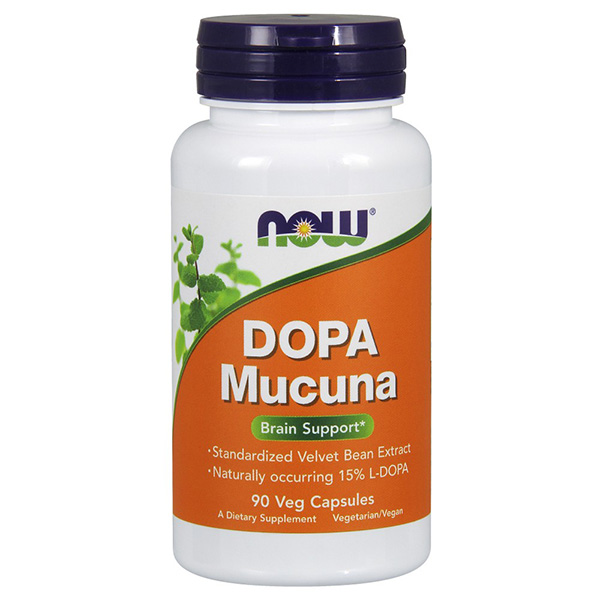 Clearance NOW DOPA Mucuna With A Best Buy Date 02/26